
Single tooth implant
One post, one crown. The standard for replacing an individual missing tooth.
Dental implants · Implantes dentales
An implant is a titanium post that replaces the root of a missing tooth and fuses with your jawbone. Topped with a custom crown, it looks, bites and lasts like the tooth you lost.
How they work
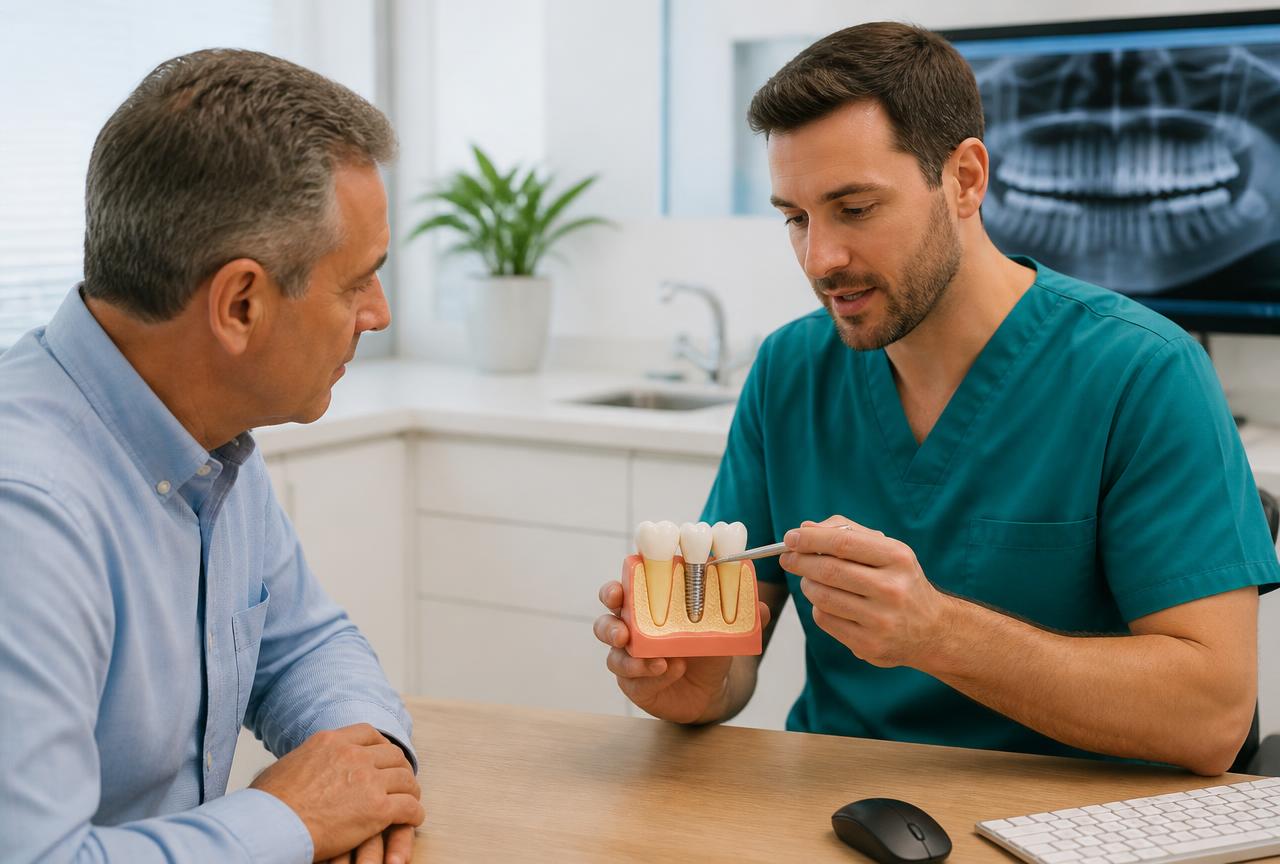
Three parts make up an implant: the post placed into the bone, an abutment connector, and the crown you see and chew with. Over three to six months the bone grows around the post — a process called osseointegration — locking it in place. Unlike a bridge, an implant does not require grinding down healthy neighboring teeth, and unlike a denture it stops the jawbone from shrinking.
Options
One post, one crown. The standard for replacing an individual missing tooth.
Two implants carry a bridge across several missing teeth in a row.
Four strategically angled implants support a full fixed arch — often the same day.
The process
3D scan, bone assessment and a written treatment plan with costs.
The post is placed under local anesthesia in a single appointment.
3–6 months of osseointegration, usually with a temporary tooth in place.
A custom crown is shade-matched, seated and adjusted to your bite.
Candidacy
The jawbone under a missing tooth begins resorbing within months. Neighboring teeth drift and tilt into the space, the opposing tooth over-erupts, chewing shifts to one side, and the lower face can start to look collapsed. Speech and confidence often follow. Replacing the tooth early keeps the problem small — and cheaper to solve.
Compare
| Implants | Dentures | Bridges | |
|---|---|---|---|
| Lifespan | Decades to lifetime | 5–8 years per set | 10–15 years |
| Preserves bone | Yes | No | No |
| Affects other teeth | No | No | Yes — must be reshaped |
| Feels fixed | Yes | Removable | Yes |
| Upfront cost | Highest | Lowest | Middle |
| Long-term value | Highest | Repeat replacements | Moderate |
Still deciding? Compare with our dentures options or explore full mouth rehabilitation.
Cost & financing
Surgical and restorative fees together, so you know the total before we start.
We bill any implant or crown benefit your plan includes.
Financing spreads treatment across the healing timeline.
Questions
Still have questions? Our bilingual team answers in English or Spanish.
(718) 565-6740Book a consultation with 3D imaging and a written plan.